
Are you struggling with challenges like, “I want to manufacture high-precision components such as bevel gears and tripods with zero material loss,” or “But we don’t have the budget to install an expensive multi-axis double-action press”?
In this article, we provide an in-depth guide to Enclosed Forging, a method that drastically improves material yield and eliminates the need for subsequent machining. We will explore the critical differences between enclosed forging, flashless forging, and conventional flash forging. Furthermore, we will introduce a realistic approach to achieving enclosed forging on your existing general-purpose press using our proprietary “Enclosed Die Sets,” along with specific development case studies.
What is Enclosed Forging? Basic Forming Principles and Implementation on General-Purpose Presses
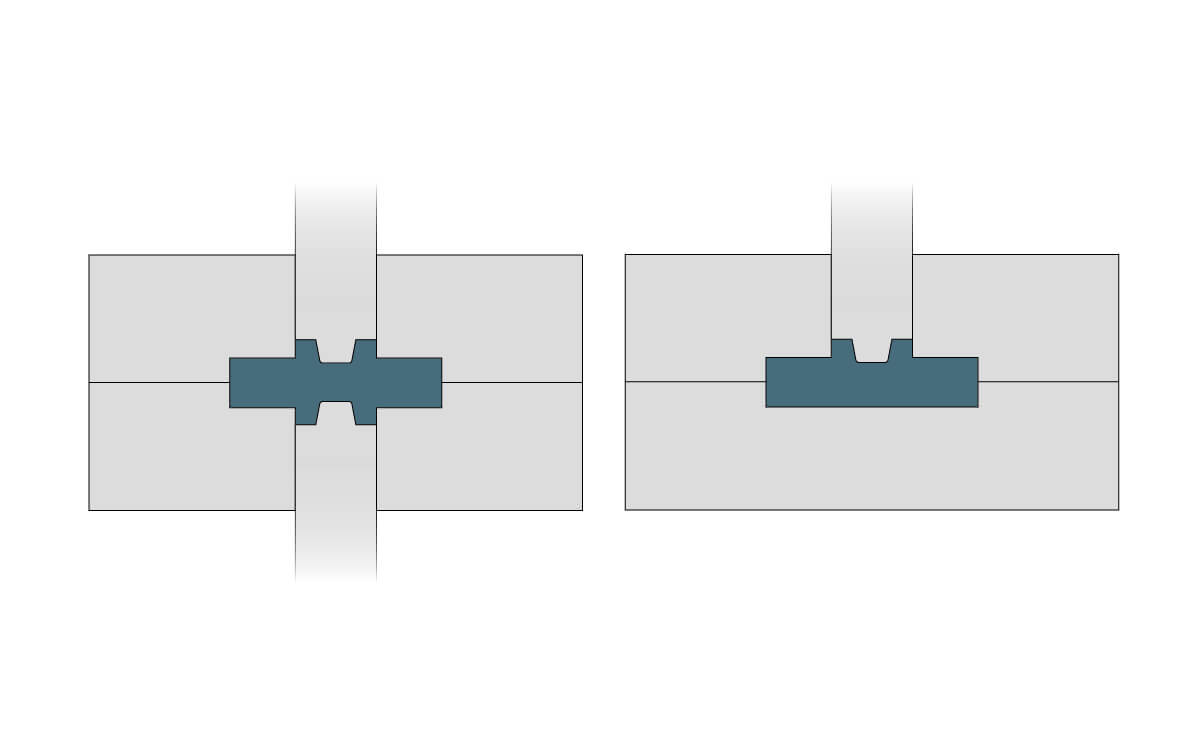
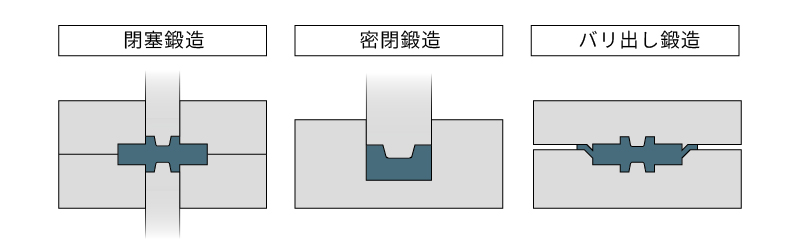
Enclosed Forging is a forging method where the upper and lower dies come into complete contact (kissing) to seal the cavity entirely before a punch (the tool that pushes the material) penetrates to begin forming. True to its name, it is a method characterized by “completely enclosing the cavity before forging.”
Differences Between “Single-Enclosed” and “Double-Enclosed” Forging
Enclosed forging is classified into two major methods depending on the component shape:
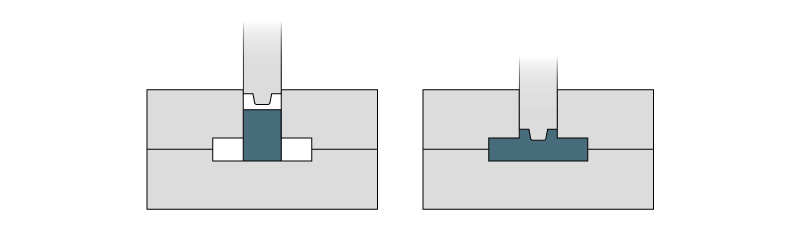
Single-Enclosed Forging:
Formed by a punch from only one side while the die is sealed. This is primarily used for asymmetrical components such as bevel gears and inner races.
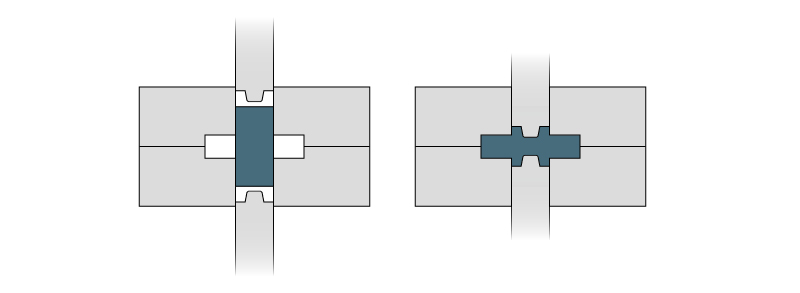
Double-Enclosed Forging:
Formed by upper and lower punches simultaneously while the die is sealed. This is ideal for symmetrical components like tripods and spiders.
A Realistic Approach for General-Purpose Presses
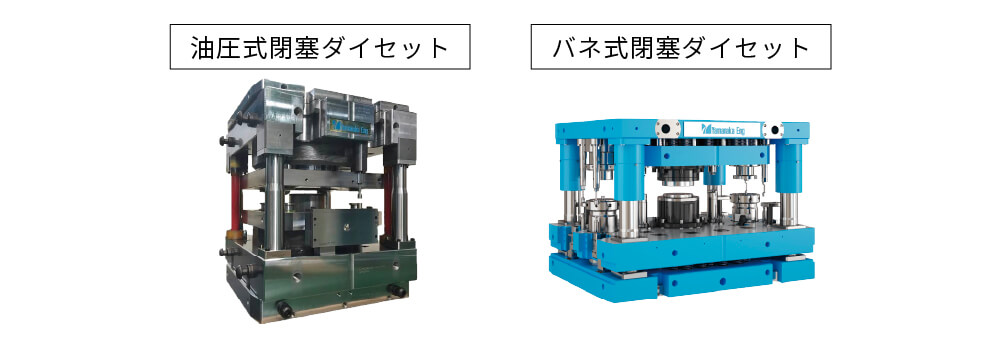
Enclosed forging typically requires a “multi-axis double-action press” (a press machine with multiple driving axes). However, by utilizing our Enclosed Die Set, enclosed forging becomes fully achievable even on a standard single-action general-purpose press.
Consequently, there is no need for huge initial investments in purchasing expensive new press machines. You can leverage your existing assets—the general-purpose presses you already own—minimizing investment risk while establishing a high-precision enclosed forging line.
At Yamanaka Eng, we frequently support smooth transitions to mass production using this exact advantage: “Utilizing our multi-axis double-action press during the prototyping stage, and then integrating our Enclosed Die Set into the customer’s own general-purpose press for mass production.” This step-by-step approach effectively minimizes upfront costs.
By using a multi-axis double-action press during the trial phase, we can determine the exact minimum required tonnage and enclosing force for your target mass-production component. Preliminary testing on factors like forming speed can also be conducted, minimizing risks during the transition to mass production. Once the required enclosing force is quantified, it clarifies the optimal investment path—whether you need a high-capacity Hydraulic Enclosed Die Set or a cost-effective Spring-Loaded Enclosed Die Set.
Recent Market Trends
With the recent surge in raw material prices and the rapid acceleration of carbon-neutral Initiatives, an increasing number of companies are shifting their manufacturing methods from conventional “flash forging” to “hot enclosed forging,” which features near-zero material loss.
Differences Between “Enclosed Forging,” “Flashless Forging,” and “Flash Forging”
Enclosed forging is often confused with “flashless forging” (completely sealed compression) and conventional “flash forging” (forging with flash gutters).
The biggest difference between conventional flash forging and the other two flashless methods is whether or not excess material (flash) is generated. However, even when comparing enclosed forging and flashless forging—both of which produce no flash—their forming principles and the difficulty of process control differ significantly.
The table below summarizes the characteristics, forming principles, and tool-load differences of each forging method.
Comparison of Key Forging Methods
| Item | Enclosed Forging | Flashless Forging | Flash Forging |
|---|---|---|---|
| Forming Principle | After the dies are completely enclosed, a punch pushes the material to flow into the cavity. | Material is fully clamped between the upper and lower dies, compressing the entire piece with no escape path. | Material is compressed by upper/lower dies, allowing excess material to escape through the gap as flash. |
| Material Yield | Excellent (No flash) | Excellent (No flash) | Poor (Generates flash) |
| Material Volume Control | Relatively Flexible (Excess volume can be absorbed by punch stroke position or back-pressure structures.) | Extremely Strict (Volumetric variations directly lead to die failure or forming defects.) | Flexible (Excess material escapes as flash, eliminating the need for strict volume control.) |
| Tool Load & Die Life | ◯ (Good) (Easy to control localized internal pressure, making die life manageable.) | △ (Fair) (Internal pressure spikes easily due to the lack of an escape path, posing a high risk of die breakage.) | ◯ (Good) (Low tool load since internal pressure escapes, though high material flow increases wear risks.) |
| Required Equipment | Multi-axis double-action press OR General-purpose press + Enclosed Die Set | Compatible with general-purpose presses | Compatible with general-purpose presses |
| Design Flexibility | Low (Suited for lateral protrusions, certain gear tooth profiles, and symmetrical/asymmetrical parts.) | Medium (Suited for relatively simple axisymmetrical shapes, thin parts, or disc shapes.) | High (Widely compatible with complex shapes.) |
| Required Expertise | Extremely High | Average | Average |
As shown in the comparison table, enclosed forging is a superior method for controlling material yield and die life, but it simultaneously demands extremely advanced technical capabilities (such as advanced CAE analysis and highly sophisticated die design).
Why Choose Enclosed Forging? 3 Key Benefits
Drastic Material Yield Improvement (Massive Reduction in Material Costs)
Enclosed forging completes the forming process into a near-net shape, requiring only the absolute minimum weight of input material. Because the “flash” inevitably generated in conventional die forging is completely eliminated, the impact on material cost reduction is immense—especially for components utilizing expensive specialty steels.
Process Shortening via “Machining-Less” Operations
Since it enables “Net-Shape” forming close to the final product dimensions, subsequent processes such as outer diameter and end-face turning can be skipped or minimized. For example, with bevel gears, the outer tooth profile can be left exactly as forged (no machining required), requiring turning only for the inner diameter or minor grinding for final finishing. Minimizing machining allowances drastically boosts overall productivity.
High Dimensional Accuracy and Excellent Surface Replication
Because the material flows after the dies are completely sealed, the shape of the die is replicated onto the product with extreme precision. This ensures exceptionally high dimensional accuracy, enabling the stable production of high-quality components with zero variance.
The “Core Technologies” Powering Yamanaka Eng’s Enclosed Forging
While enclosed forging offers massive benefits, it presents steep technical hurdles: “Internal pressure becomes extremely high, causing the dies to crack before reaching their expected lifespan,” or “Material fails to fill every corner (underfilling/shrinkage).”
To overcome these challenges, Yamanaka Eng integrates the following advanced core technologies:
Advanced CAE Analysis Technology:
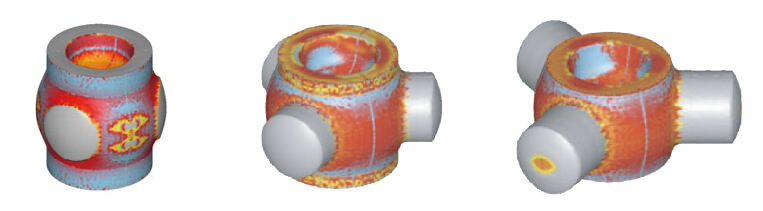
It is vital to predict where stress will concentrate inside the die beforehand. Utilizing the CAE analysis software “DEFORM,” we highly simulate material flow and die stress to derive optimal forming conditions digitally.
Die Design & Manufacturing Based on Deep Insights:
We design and build high-load-resistant tooling capable of enduring extreme surface pressures. Our decades of accumulated data and expertise back the creation of crack-resistant, long-life dies.

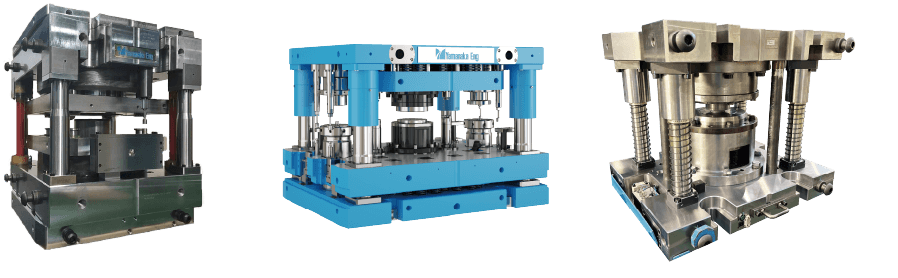
Design & Manufacture of Diverse “Enclosed Die Sets”:
We possess extensive engineering expertise in designing and manufacturing high-precision, high-rigidity Enclosed Die Sets compatible with various pressure sources (hydraulic, gas, and spring). From the gas-powered systems we engineered ahead of the industry to our proprietary spring-loaded systems, we offer optimal proposals tailored to your existing equipment and budget.
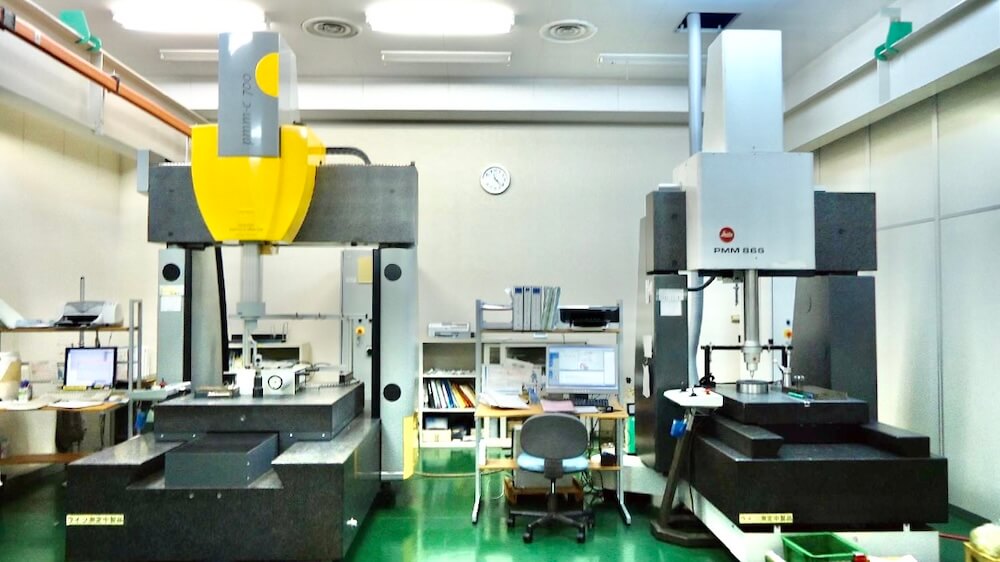
Metrology Supporting Strict Quality Control:
To maintain the outstanding dimensional accuracy of our dies and forgings, we never compromise on our measurement environment. We house an ultra-high-precision 3D coordinate measuring machine (CMM) manufactured by Germany’s renowned Leitz. Conducting precise measurements inside a strictly temperature-controlled room allows us to maintain micron-level quality.
Physical Verification via Multi-Axis Presses (Prototyping Process):
Owning multi-axis double-action presses in-house enables us to conduct physical machine verifications rather than relying purely on theory. We present technical proposals backed by solid experimental data, including the minimum required tonnage, enclosing force, and forming speeds.
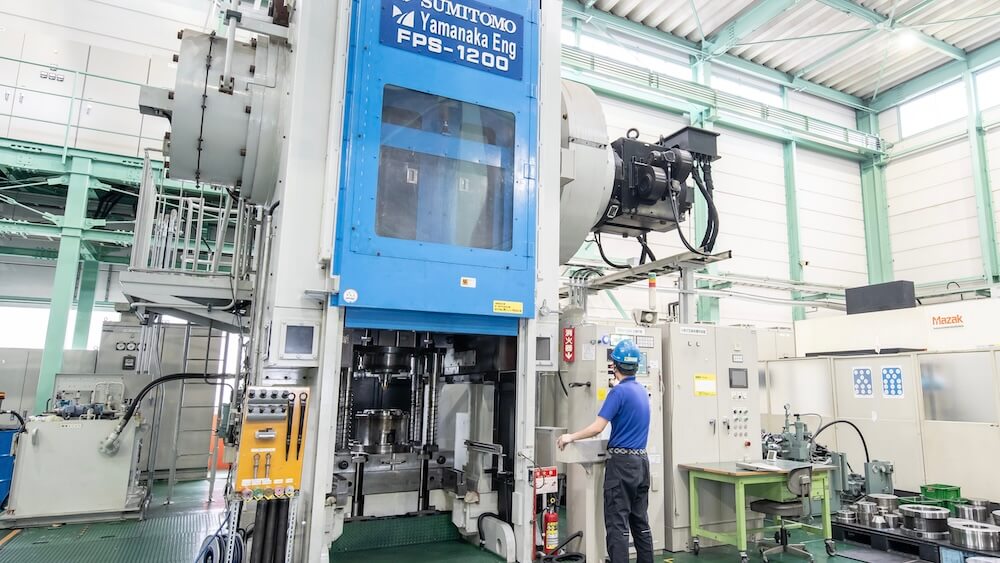
Enclosed Forging Development Track Record & Case Studies
Our advanced forging technologies support manufacturing across various sectors, centering on the automotive industry. Here are representative case studies selected from our extensive development and manufacturing history:
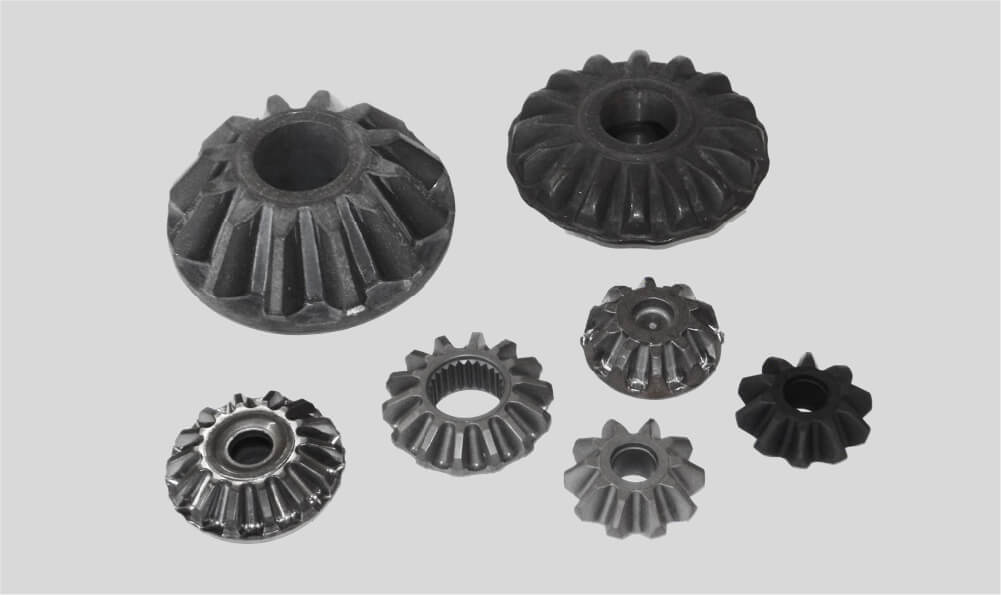
Bevel Gear
Method:Cold Enclosed Forging
Material:SCr420
Number of Stations:
2-5 stations
Forming Tonnage:700ton
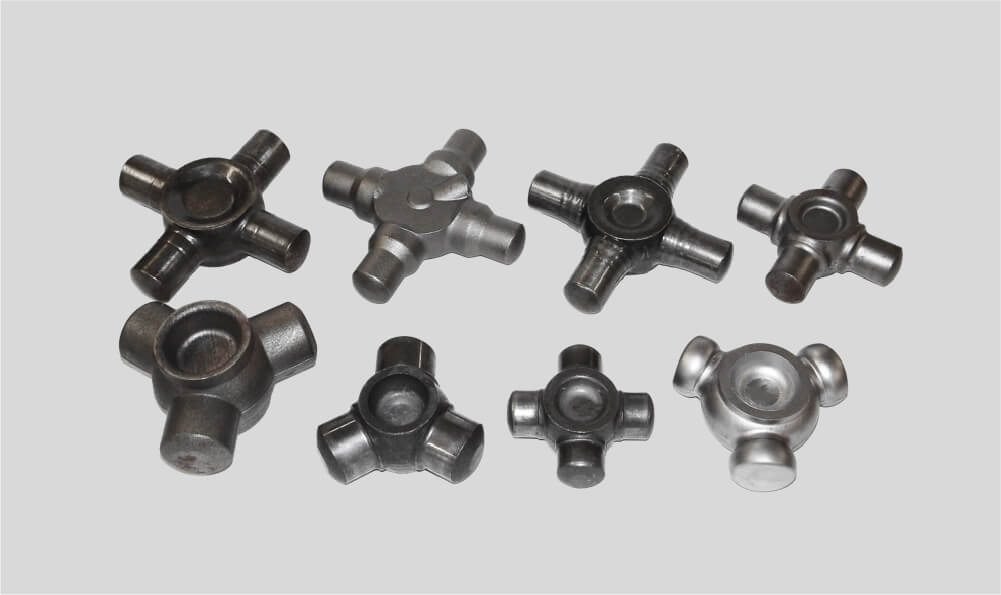
Spider / Tripod
Method:Cold Enclosed Forging
Material:SCr420
Number of Stations:
1 stations
Forming Tonnage:500ton(Max)
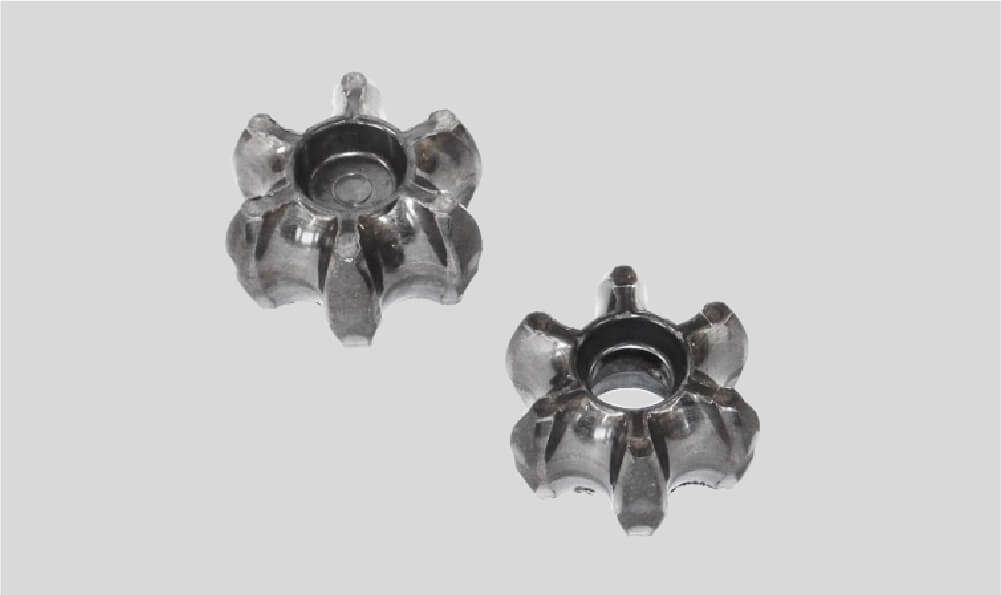
Inner Race
Method:Cold Enclosed Forging
Material:SCr420
Number of Stations:
2-3 stations
Forming Tonnage:570ton
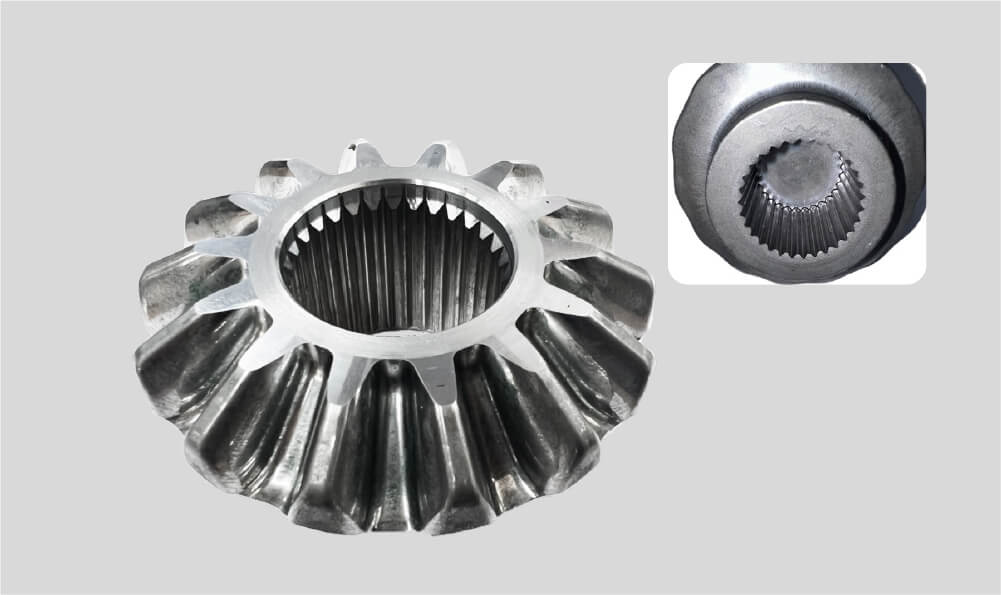
Bevel Gear with Serrationー
Method:Cold Enclosed Forging
Material:SCM420
Number of Stations:1 shot
Forming Tonnage:650ton
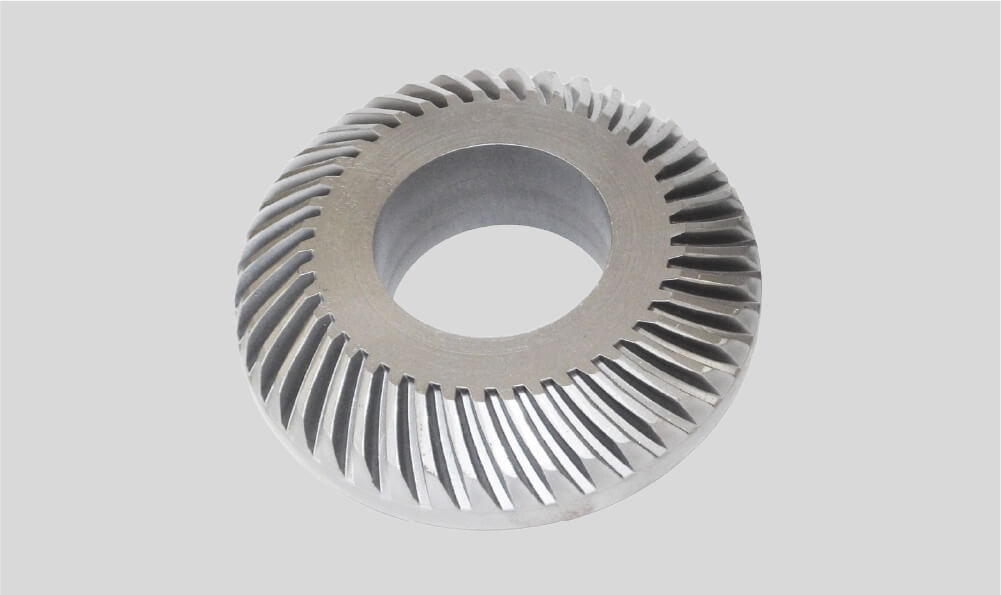
Spiral Bevel Gear
Method:Cold Enclosed Forging
Material:SCr420
Number of Stations:1 shot
Forming Tonnage:1300ton
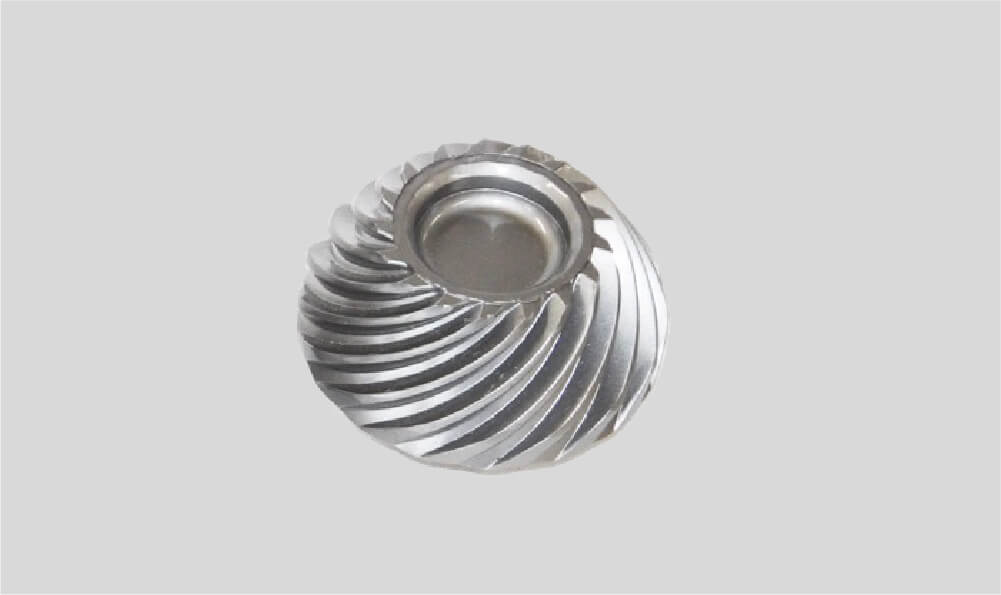
Spiral Bevel Gear
Method:Cold Enclosed Forging
Material:SCr420
Number of Stations:1 shot
Forming Tonnage:1200ton
Partner with Yamanaka Eng for Enclosed Forging Conversions and Development
- “We want to drive down material costs.”
- “We want to reduce machining steps to shorten lead times.”
- “We want to utilize our own general-purpose presses to manufacture high-value-added components.”
If you face any of these challenges, please contact Yamanaka Eng.
From advanced CAE analysis backed by years of expertise to die design, proprietary die-set development, and physical prototyping/verification using our multi-axis presses, we provide a one-stop solution to lead your process conversions and new component developments to success.
[Click Here for Technical Consultation & Inquiries]
Author Profile

H.T Director, Solution Division, Yamanaka Eng Co., Ltd.
H.T is a veteran engineer who has dedicated his entire 43-year career to the field of forging. During his long tenure at a major automotive manufacturer, he mastered every stage of the process—from die design and equipment installation to new component launches and the development of advanced forging methods. His technical expertise is highly recognized in the industry, highlighted by his prestigious receipt of the "Sokeizai Industry Technology Award" on two separate occasions.