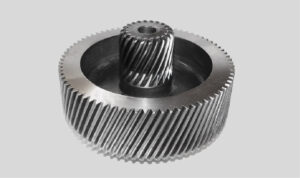
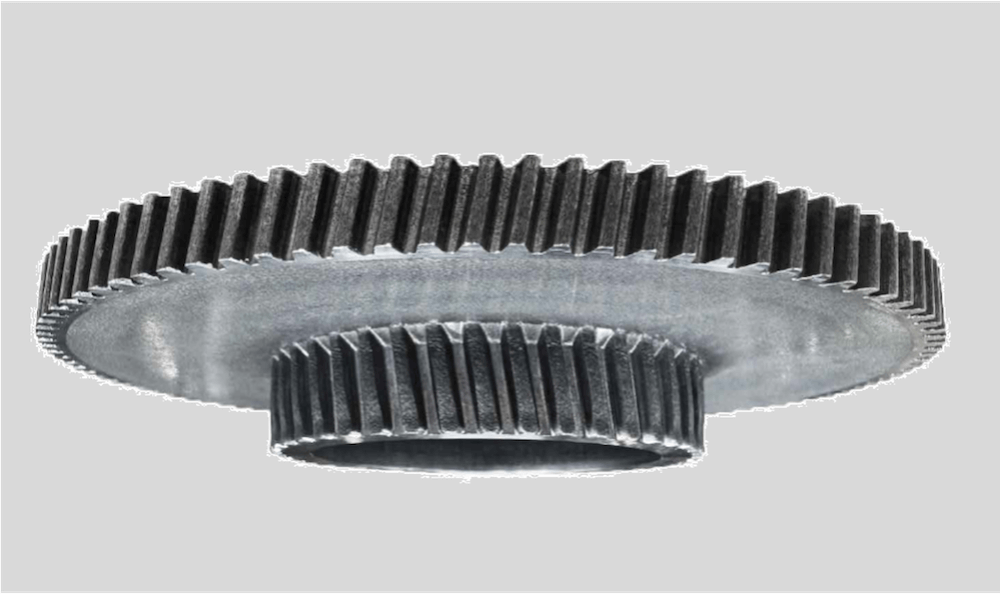
This development case study focuses on achieving cost reduction and improved precision through part integration for plate-shaped double-stage helical gears used in industrial robots and other applications.
| Product Name | Plate-Shaped 2-Stage Helical Gear |
| Application | Industrial Robots, etc. |
| Material | Alloy Steel (SCr / SCM) |
| Process | Cold Forging (Plate Forging) |
| Development Period | 3 – 5 Months |
Development Background and Challenges
Traditionally, these plate-shaped double-stage helical gears were manufactured by forging or machining two separate parts and then joining them together. This method resulted in double the manufacturing costs. Furthermore, because the structure relied on joining separate components, it was inherently difficult to maintain high coaxiality (precision) between the two gear stages.
Part Integration and Improved Coaxiality via Multi-Axis Double-Action Press
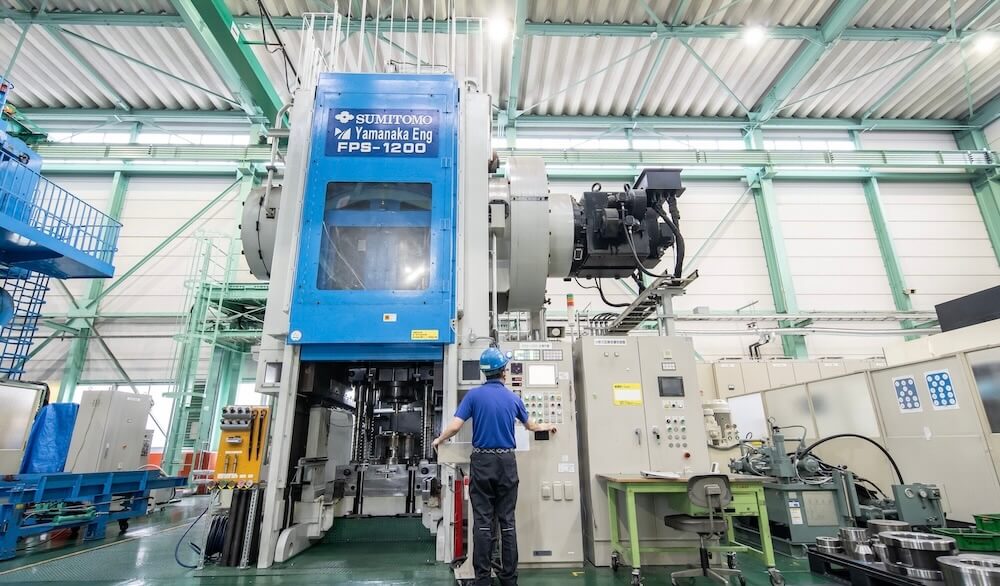
To fundamentally resolve these issues, we developed a manufacturing process using a multi-axis double-action press. Specifically, by maximizing the functions of the multi-axis press and setting optimal motion profiles based on our extensive expertise, we achieved part integration through single-shot simultaneous forming. This process significantly reduces processing time and total costs.
Moreover, because the gear is formed in a single shot, the coaxiality is far superior compared to traditional methods of joining separate parts.
Eliminating Lead Constraints with a New Die Structure
A key factor enabling the use of the multi-axis double-action press is our uniquely developed new die structure. This structure allows us to maximize the press’s capabilities, enabling simultaneous forming and knockout within a single shot, even for complex geometries.
As a result, constraints on the gear lead have been eliminated, making it possible to have opposite helix directions for the large and small helical gears.
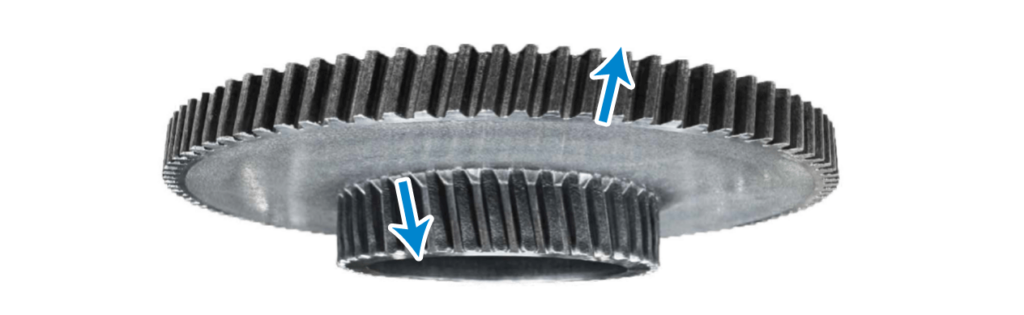
| Large Helical Gear | Small Helical Gear | |
|---|---|---|
| Normal Module | 1.2 | 1.4 |
| Number of Teeth | 98 | 42 |
| Normal Pressure Angle | 17.5° | 20° |
| Helix Angle | 10°(右) | 10°(左) |
| Large Diameter | φ120 | φ61 |
| Small Diameter | φ115 | φ57 |
*Dimensions are based on the prototype sample.
Reducing Trial and Error through Thorough CAE Verification
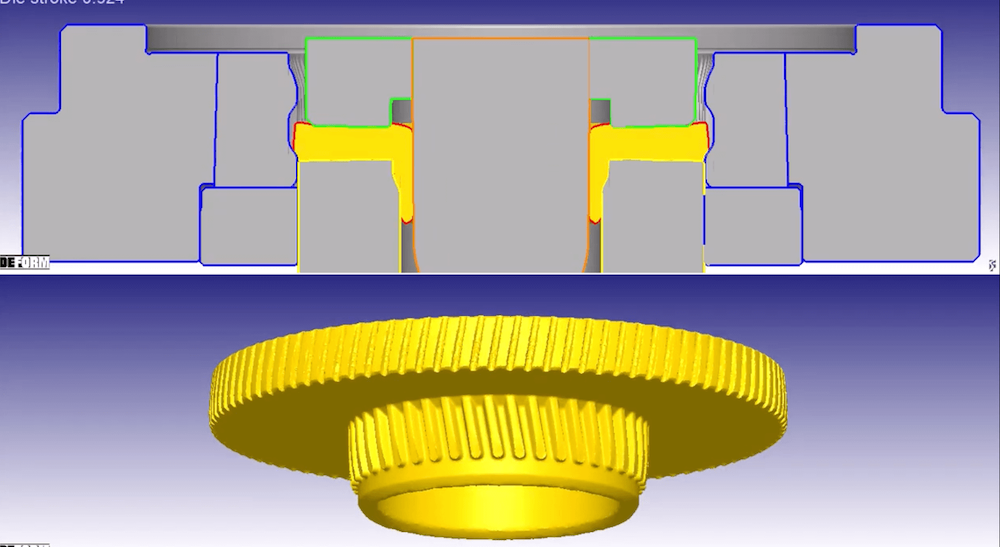
To reduce costs associated with prototype trial and error, we conducted thorough pre-verification using “DEFORM” CAE software.
Initially, we ran simulations on a 1/4 model with multiple patterns to narrow down the design options. Subsequently, a full-model simulation was performed to confirm the detailed die manufacturing conditions.
Thanks to this analysis, the dies we designed and manufactured successfully produced parts in the target shape during the very first trial, without any damage to either the dies or the products.
Integrated Development System to Meet Sophisticated Demands
Yamanaka Eng has established an integrated development system to realize complex, high-precision manufacturing. Our greatest strength lies in our advanced facilities, including multi-axis double-action presses, and our wealth of experience and knowledge to utilize them effectively.
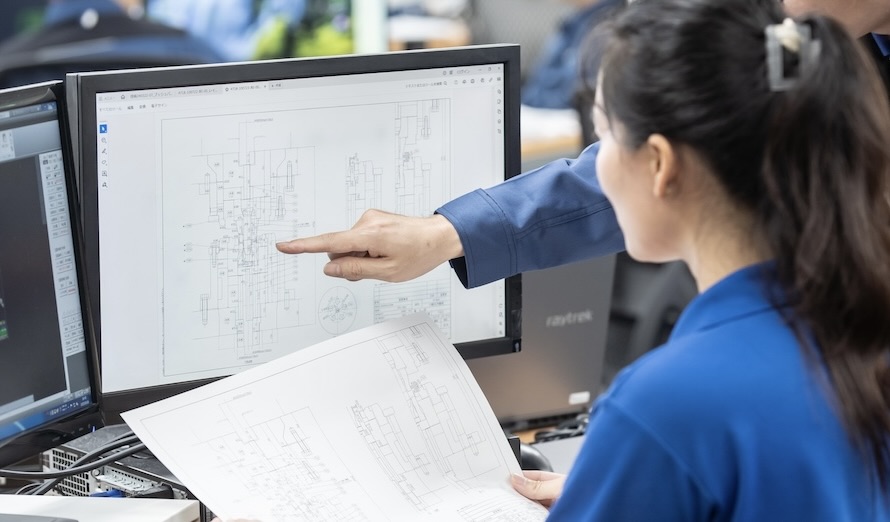
Furthermore, by leveraging CAE analysis, we can quickly perform optimal designs that pursue the fracture limits of a product from the early stages of development.
By fusing state-of-the-art equipment, advanced CAE analysis, and years of on-site expertise, we significantly shorten the lead time for technical development. We support our customers by proposing optimal manufacturing methods and delivering products with the highest precision for even the most difficult requirements.
FAQ
Do you only provide support up to development and prototyping?
No, we provide integrated support from development and prototyping to mass production and after-sales service. We are not just a “prototype manufacturer”; we also offer die design and manufacturing, proposals for improving die life, and troubleshooting in the event of die failure to ensure stable production during the mass production phase.
What is the typical development lead time?
While it varies depending on the part geometry and difficulty, the standard lead time is approximately three months from the start of design to sample submission. Although integrated forming of double-stage helical gears is highly challenging, we minimize the number of physical trials by utilizing cutting-edge CAE analysis (DEFORM).
What equipment specifications (press load and functions) are required for production?
As a general principle, we first explore processes that utilize your existing equipment. Only when equipment capabilities make this difficult do we propose the necessary specifications and support building an optimal production line, including peripheral systems, alongside process development.
Author Profile

H.T Director, Solution Division, Yamanaka Eng Co., Ltd.
H.T is a veteran engineer who has dedicated his entire 43-year career to the field of forging. During his long tenure at a major automotive manufacturer, he mastered every stage of the process—from die design and equipment installation to new component launches and the development of advanced forging methods. His technical expertise is highly recognized in the industry, highlighted by his prestigious receipt of the "Sokeizai Industry Technology Award" on two separate occasions.